
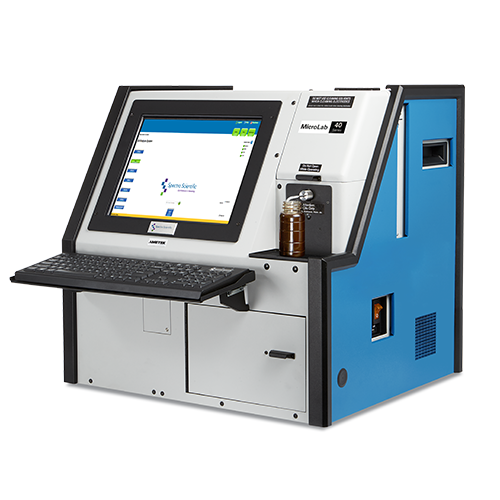

Description
The MicroLab Series is a fully automated lubricant analysis system that provides comprehensive on-site testing for oil and equipment health. By combining automation with artificial intelligence, the system makes it possible for any fleet to perform expert-level oil analysis without requiring a specialized laboratory technician. The system offers a complete suite of tests including chemistry, viscosity, and elemental analysis to identify potential equipment failures and oil degradation before they lead to costly downtime.
The MicroLab system provides a range of benefits for operational efficiency:
- Completely automated analysis and cleaning at the push of a button
- Fast result delivery in less than fifteen minutes
- Easy to read reports with color coded alarms and recommended maintenance actions
- Automated cleaning of the system lines between samples using CheckFlush
- Compliance with the ASTM D7417 standard test method for in-service lubricants
- Integration with LubeTrak for consolidated historical data and mobile access
- Specific diagnostic statements based on over twenty years of industry knowledge
- Support for companion kits including fuel dilution and ferrous wear measurements
The MicroLab 40 model is specifically engineered for fleets that manage equipment with hydraulic systems or heavy-duty gears and transmissions. This includes applications in mining, construction, and municipal services like fire engines and waste management trucks. A key feature of the MicroLab 40 is its integrated particle counter, which monitors the cleanliness of hydraulic fluids and gear oils. This capability is essential for determining the mechanical condition of components and identifying contamination that could compromise equipment performance.
Maintenance teams benefit from the embedded Expert System, which acts as the intelligent core of the MicroLab. This software translates complex analytical data into clear, actionable service recommendations. It accounts for the specific equipment application, component type, and manufacturer to ensure that diagnostics are relevant and precise. This streamlined process eliminates the need for manual data interpretation, allowing technicians to make informed decisions quickly and maintain peak fleet performance.
 English
  Spanish